Fireplace & Chimney Clearance Guide
Planning a mantel, new flooring, a basement finish or a roof change? Check these first. They’re the minimum clearances for traditional masonry (brick or stone) fireplaces and chimneys.
Factory-built fireplace, insert or stove? Those have their own listed clearances in the manufacturer’s manual — those numbers win over anything here.
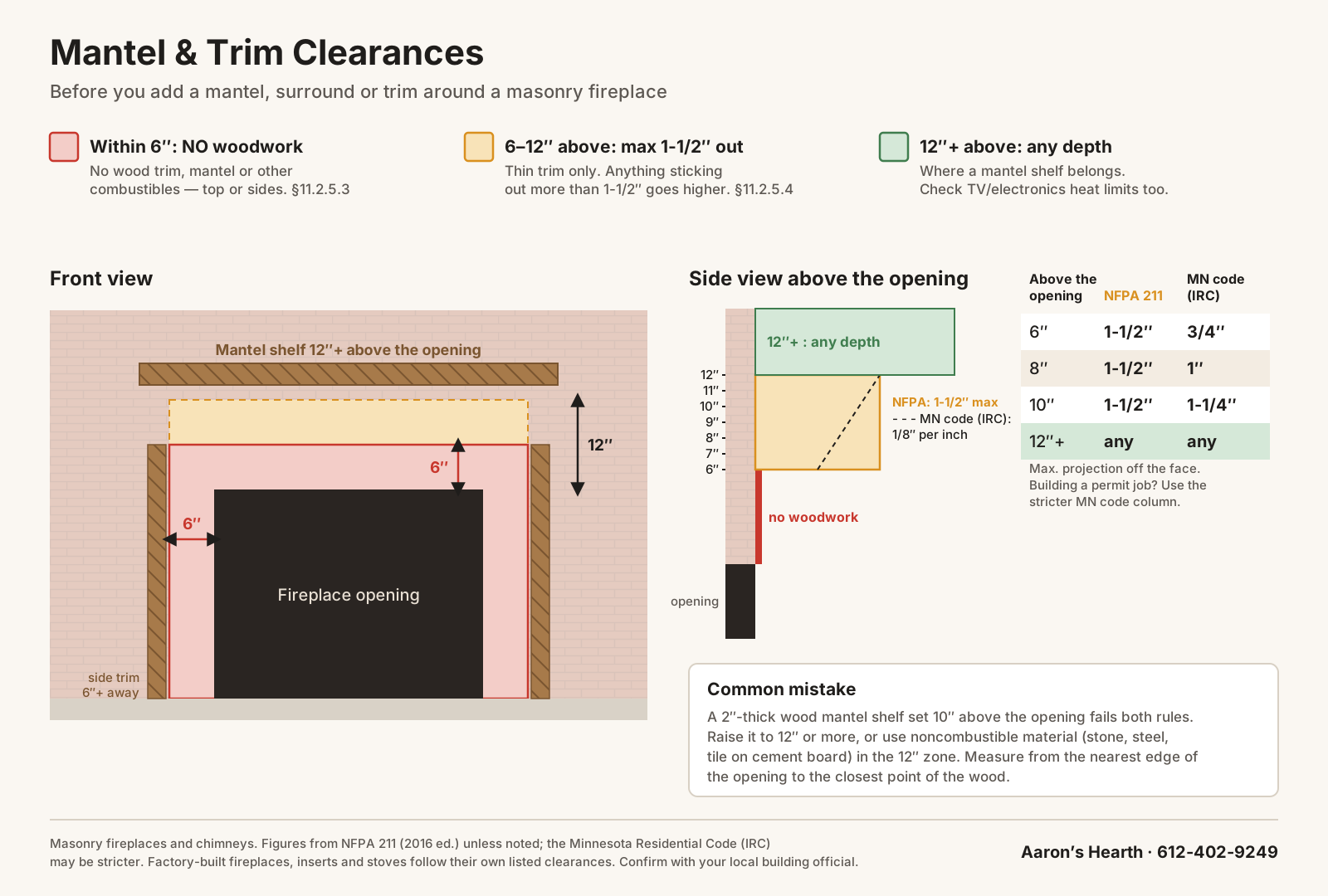
1 · Mantel & trim
- No wood trim, mantel or other combustible material within 6″ of the fireplace opening — top or sides.
- Anything above the opening that sticks out more than 1-1/2″ must be at least 12″ above it. That’s where a mantel shelf belongs.
NFPA 211 §11.2.5.3–11.2.5.4
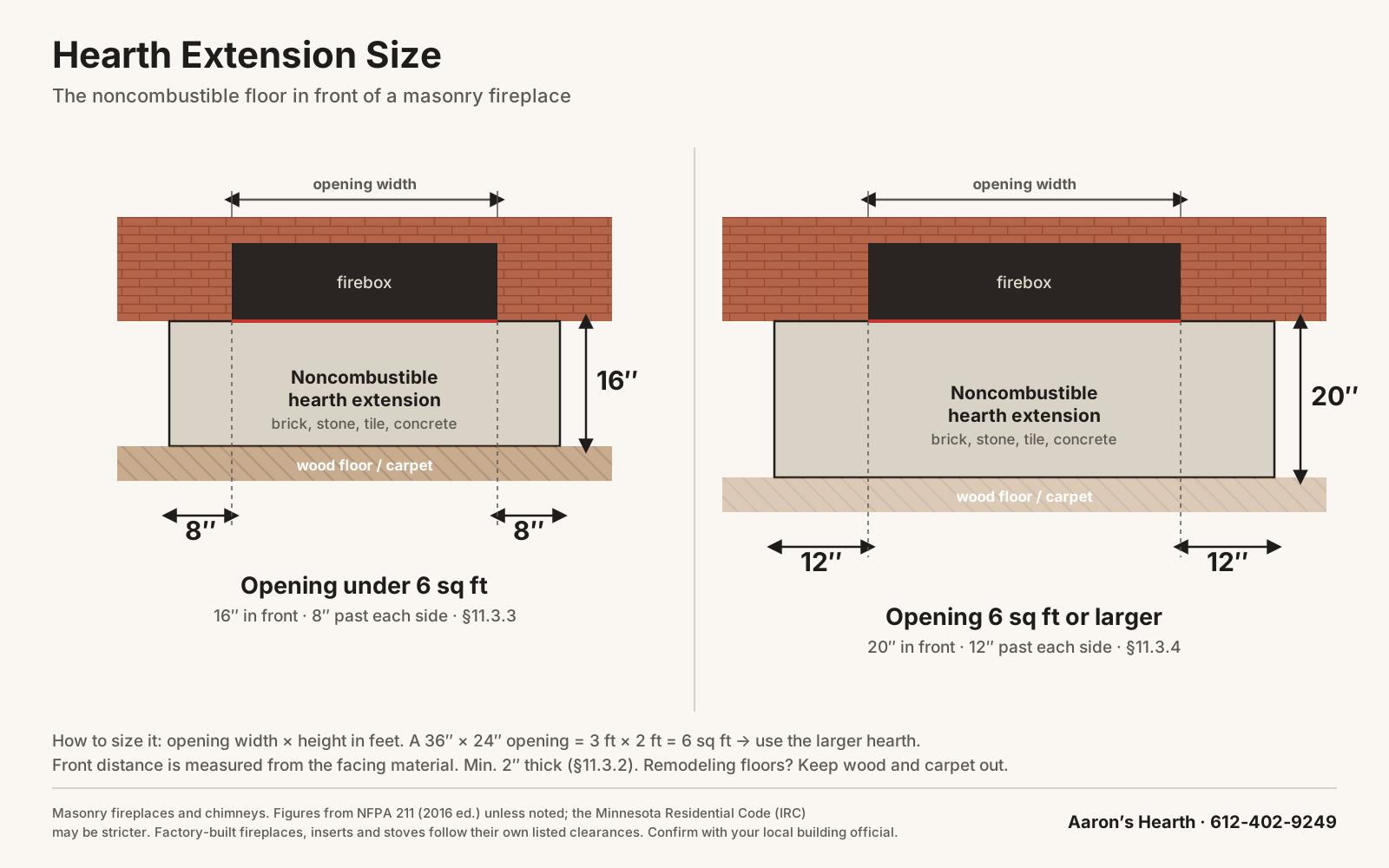
2 · Hearth extension
- Opening under 6 sq ft: noncombustible hearth at least 16″ in front and 8″ past each side.
- Opening 6 sq ft or more: at least 20″ in front and 12″ past each side.
- At least 2″ thick. Front distance is measured from the facing material.
Replacing floors? Keep wood and carpet out of this area.
NFPA 211 §11.3.2–11.3.4
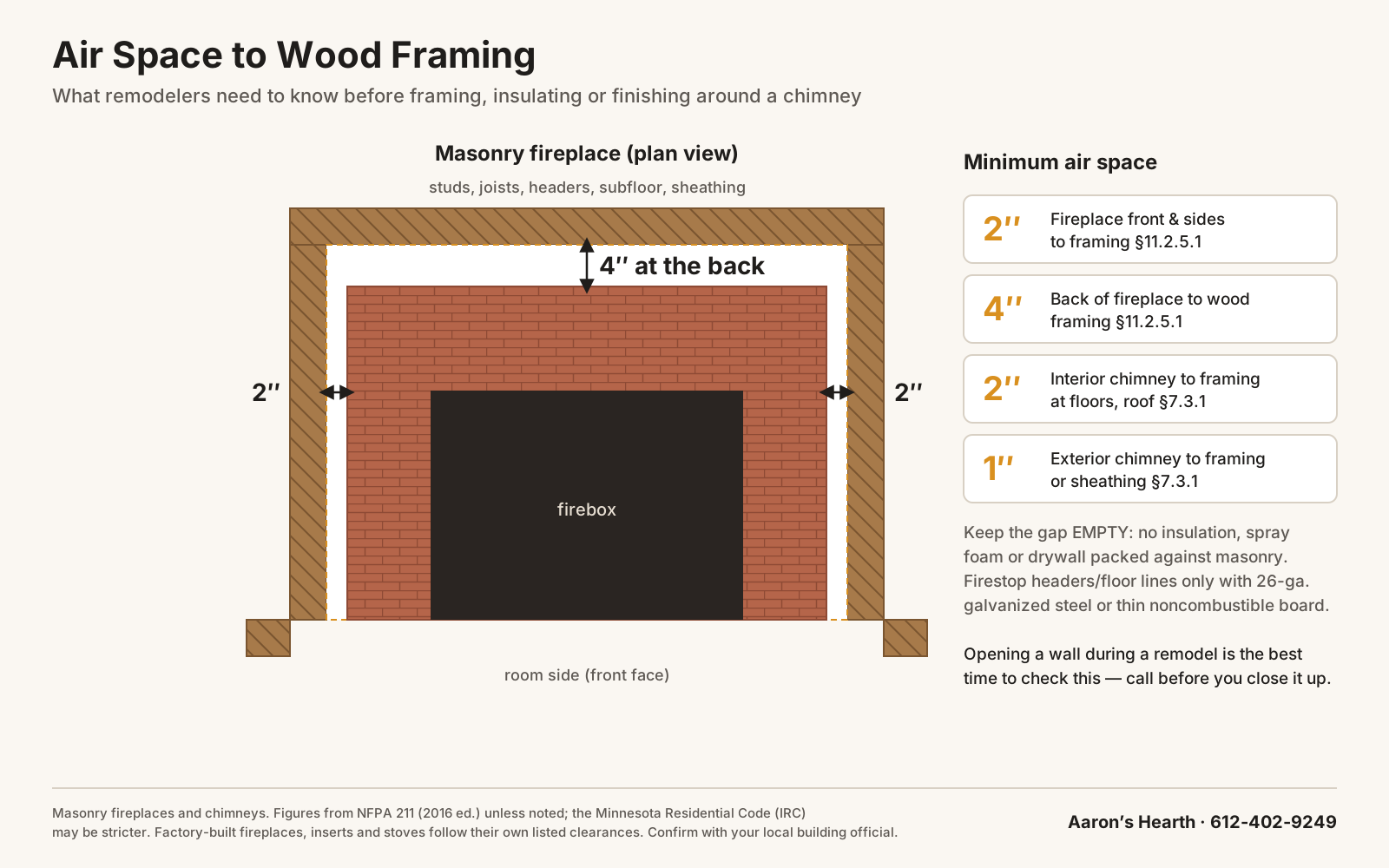
3 · Air space to framing
- 2″ between a masonry fireplace’s front and sides and wood framing; 4″ at the back.
- 2″ around an interior chimney; 1″ for an exterior chimney.
- Keep the gap empty — no insulation, spray foam or drywall packed against the masonry. Firestop only at headers and floor lines with sheet metal or thin noncombustible board.
Opening a wall during a remodel is the best time to check this — call before you close it up.
NFPA 211 §11.2.5.1–11.2.5.2, §7.3.1, Table 7.2
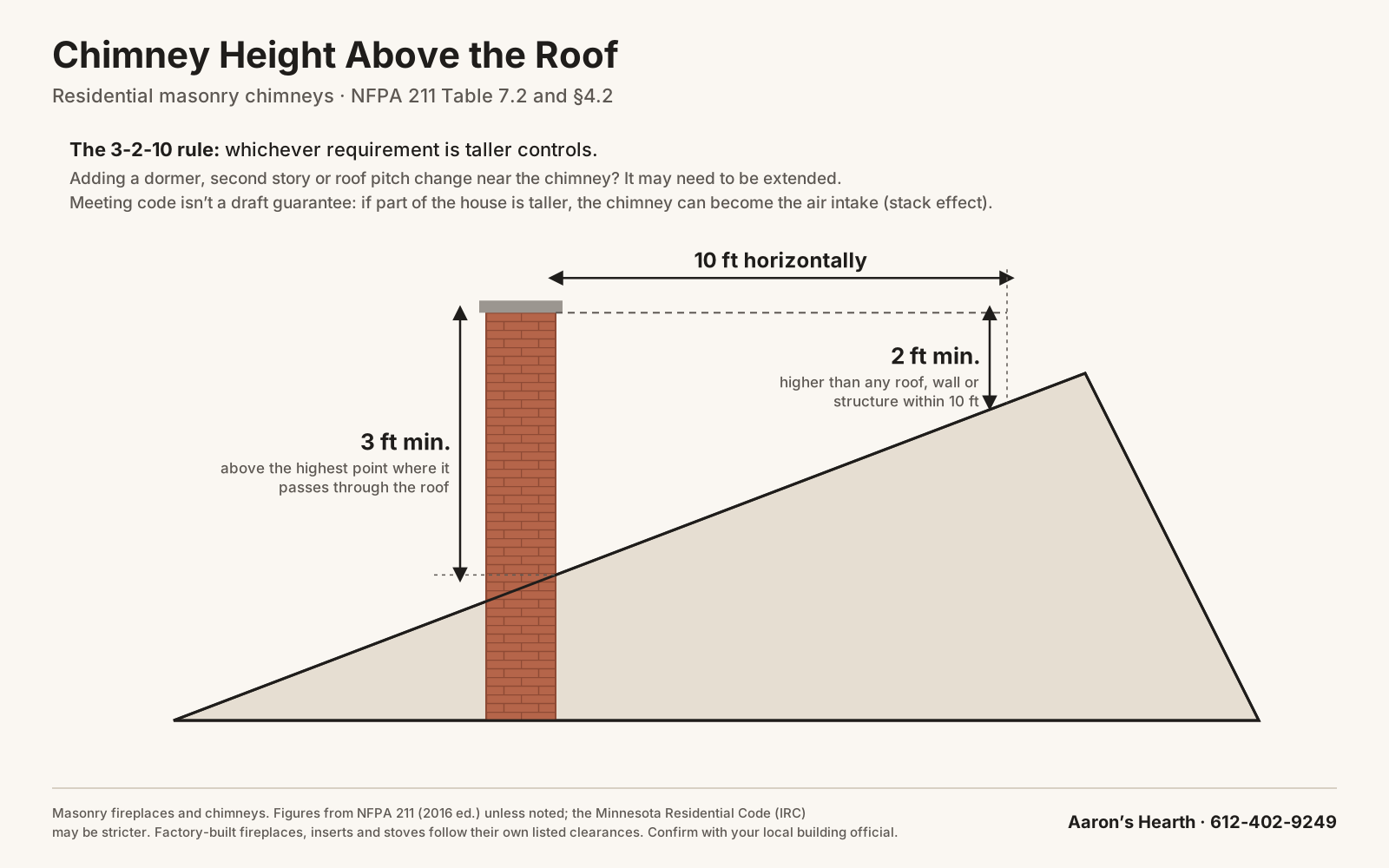
4 · Chimney height
- At least 3 ft above the highest point where it passes through the roof, and
- At least 2 ft higher than anything within 10 ft horizontally.
- Adding a dormer or second story nearby can make an existing chimney too short.
NFPA 211 Table 7.2, §4.2
Gas doesn’t make a fireplace code compliant
A common assumption: “It’s gas now, so the old fireplace problems don’t matter.” They still do. Gas logs and gas inserts are built to go into a fireplace that already meets code. They don’t fix, replace or grandfather the fireplace around them.
- Gas logs are listed for a solid-fuel fireplace with a working chimney flue, built of noncombustible materials. Wood framing against the firebox, a cracked firebox or a failing flue is still a defect.
- Gas inserts install into an existing fireplace that has to be sound and built to code. Most manuals also call for a liner to the top and have their own clearances to mantels and trim — sometimes more than the fireplace alone.
- Gas still makes carbon monoxide and water vapor. The flue has to be intact and sized for the appliance, and the damper set the way the manual says.
NFPA 54 (National Fuel Gas Code) §10.6.3; International Fuel Gas Code §602.1. Always follow the gas appliance’s installation manual.
Before a gas conversion, we check
- Firebox and smoke chamber condition
- Flue liner condition and size for the gas appliance
- Clearances: mantel, trim, hearth extension and framing
- Damper: removed, clamped or left operable per the manual
- Chimney height and draft
Then you know the fireplace is ready for gas before anyone runs a gas line.